Factory Templates Transition Guide
Fifteen templates ship inside Cue8, one per genre. None of them is a finished song. Each is a canvas: drums voiced to the genre's practice, sections walked the way the genre walks, and room left on purpose for you.
Below, one transition per template, played live on the disk with stock gestures: a mute, a roll, a pad, a knob. The bar clock lands every move, and the sound is always the template itself.
Notice how little the hands do. Every template already automates its own space and energy: the break opens the room, the drop dries it out, and the accent lane rides underneath. That is why one gesture is usually enough.
On this page
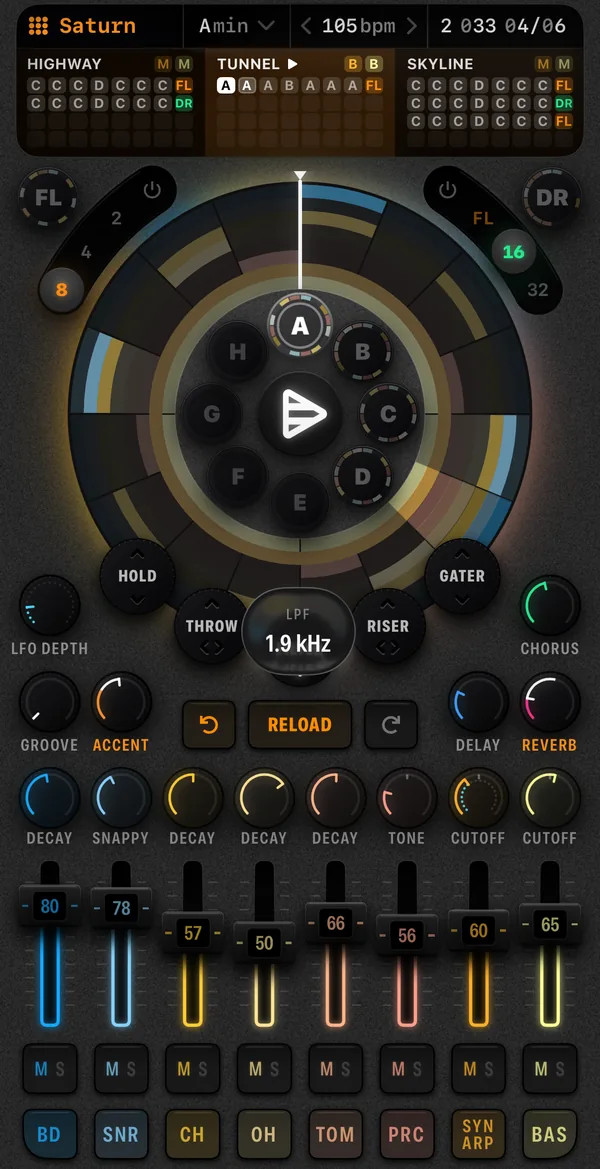
Saturn · Synthwave · 105 BPM
IGNITION 8 · HEADLIGHTS 8 · HIGHWAY 16 · TUNNEL 8 · SKYLINE 24 · AFTERGLOW 8
Three bars of A with an answer from B carry the night drive; C and D take the highway and the skyline.
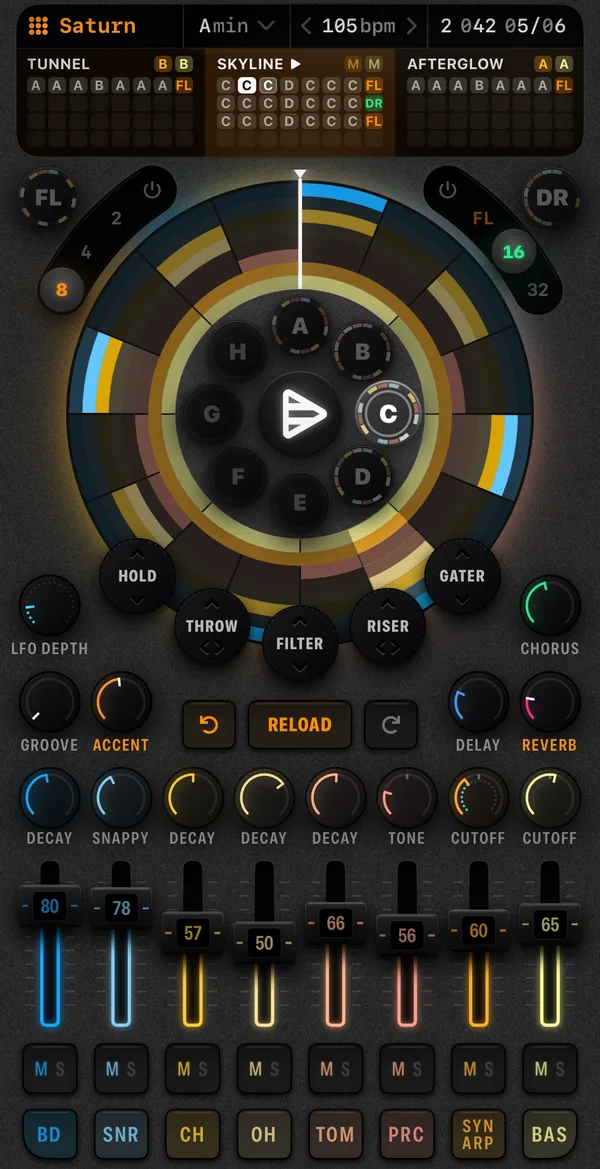
TUNNEL into SKYLINE
Drag the filter down as TUNNEL begins and latch it, then take your hands off. The section opens the room around you on its own: delay and reverb climb without a finger on them.
Tap the pad on the tunnel’s last bar. The filter knifes open with the skyline while the room dries out on the same downbeat. Tone from your hand, space from the arrangement.
The channels
The template itself switches to a different melodic variation inside TUNNEL, so the tunnel sings its own line. Open hats return with SKYLINE, moving the same direction as the filter.
Why it works. Synthwave is cinema. The section builds the room; your hand opens the tone.
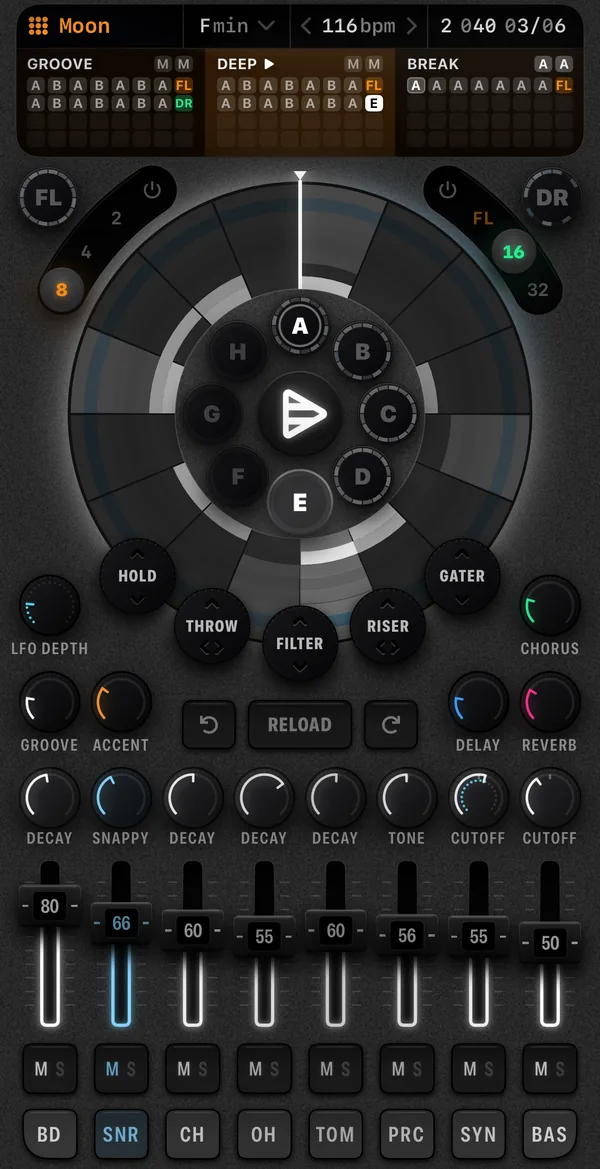
Moon · Deep House · 116 BPM
INTRO 8 · GROOVE 16 · DEEP 16 · BREAK 8 · DROP 24 · OUTRO 8
A holds the intro, A and B trade bars through the groove, C and D take the drop.
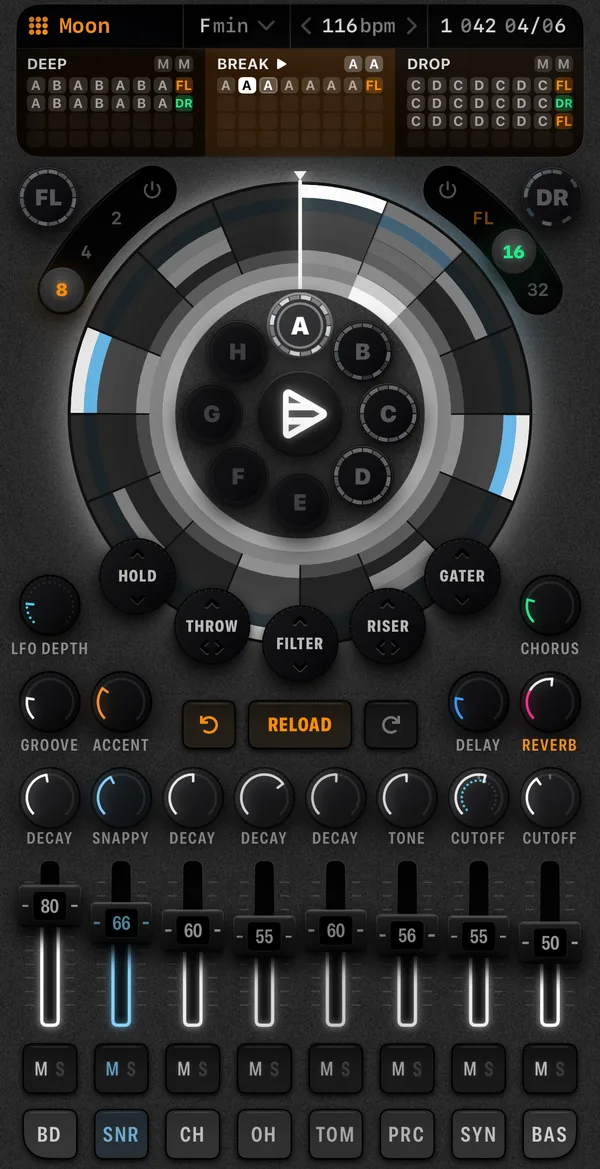
DEEP into BREAK
One tap is the whole transition. Deep in the groove, cue an empty pattern slot: on the next bar every drum falls silent and the bassline hangs alone. The break lands a bar later, softer than any filter could make it.
The channels
A sixteenth-note shaker carries DEEP. In the silent bar only the bass and chords remain, and the drums return with the break as if nothing happened.
Why it works. Deep house works by subtraction.
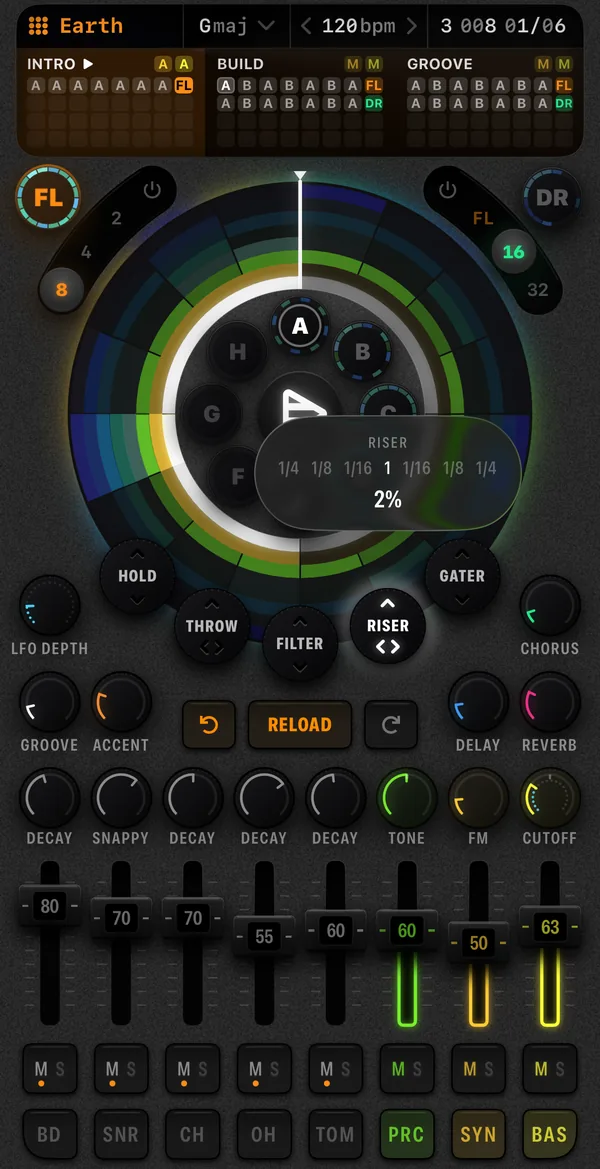
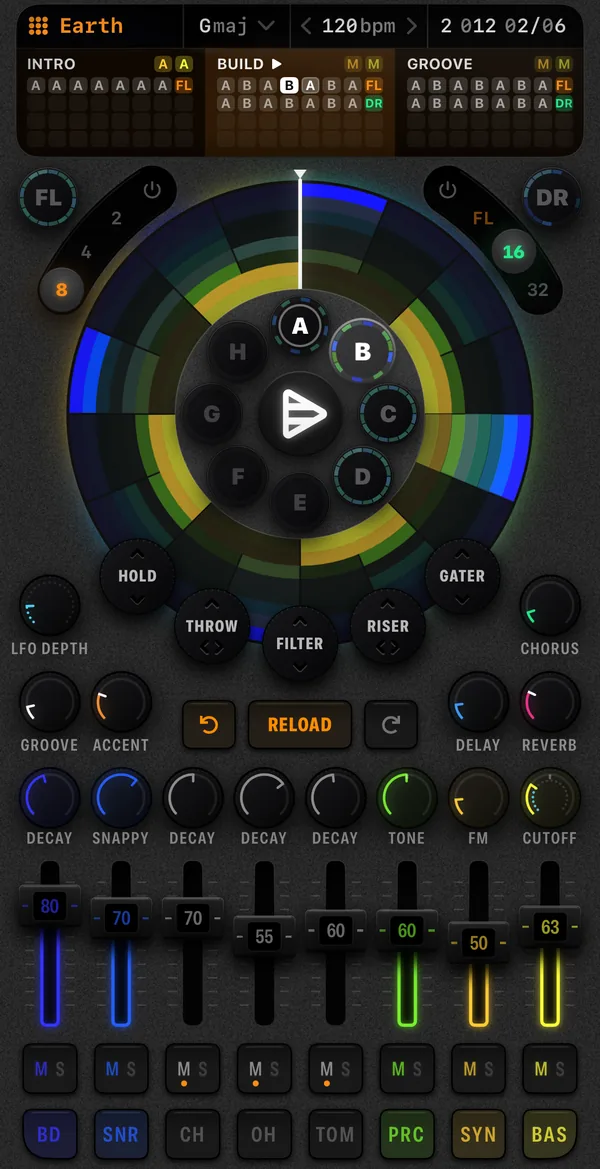
Earth · House · 120 BPM
INTRO 8 · BUILD 16 · GROOVE 16 · BREAK 8 · DROP 24 · OUTRO 8
A holds the intro, A and B trade through build and groove, C and D take the drop.
INTRO into BUILD
Start stripped: shaker, bass, and chords, everything else muted. The snare joins on bar 5 under a riser kept below fifteen percent, more air than alarm. A fill answers, and the kick arrives with the new section.
The hats complete the grid four bars later. Through all of it the bass filter opens by fingertip nudges, and even at the end it is not fully open. It just tastes brighter.
The channels
PRC carries the pulse alone. BD, SNR, and CH enter one at a time, in that order; OH and TOM stay in reserve for what comes next.
Why it works. House is built by addition. The kick earns its entrance.
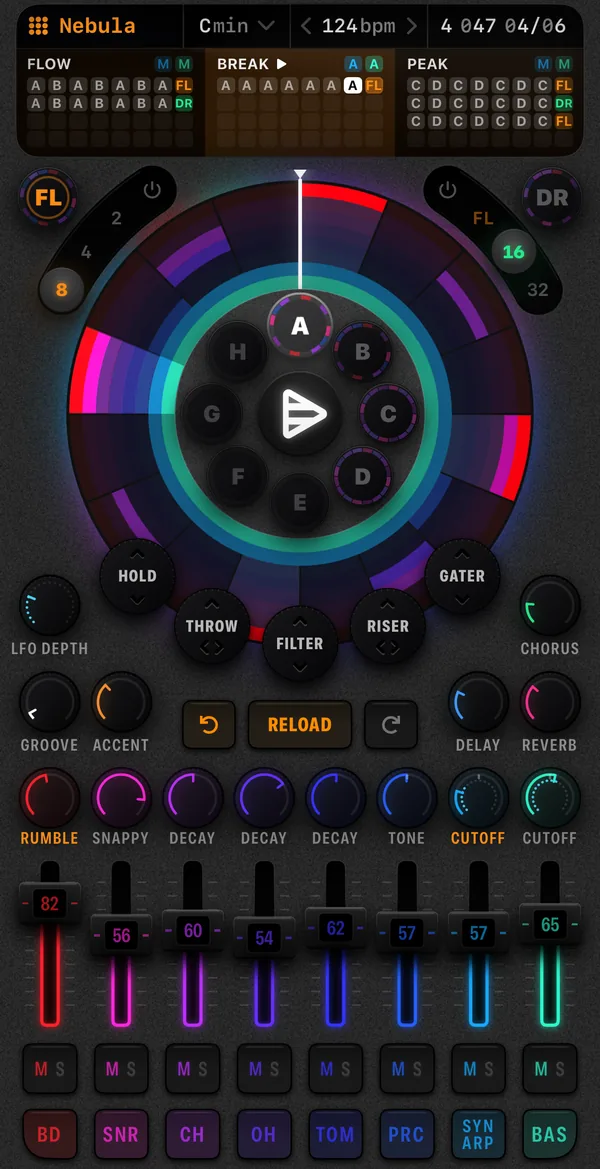
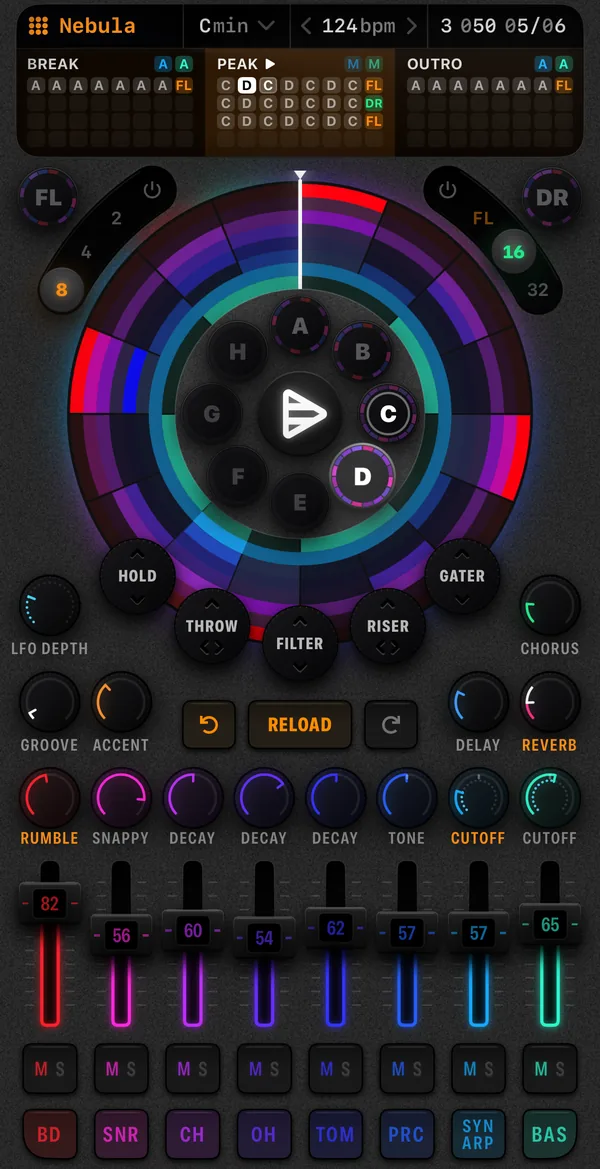
Nebula · Melodic Techno · 124 BPM
INTRO 8 · RISE 16 · FLOW 16 · BREAK 8 · PEAK 24 · OUTRO 8
A and B alternate through the rise and flow; C and D carry the peak.
BREAK into PEAK
Two knobs, two ends of the spectrum. Ride the synth cutoff up with one hand and the kick’s rumble up with the other, at the same speed, across the whole break. The middle of the mix never moves.
Then touch nothing. The section turns on its own, the hat wall arrives, the pad is already wide open. No pad, no roll, no mute: the quietest transition in the collection.
The channels
SYN carries the harmony on top, RUMBLE fills the floor underneath, and the drums thicken on their own as the section turns.
Why it works. Melodic techno lives at the extremes. Open both ends and leave the middle alone.
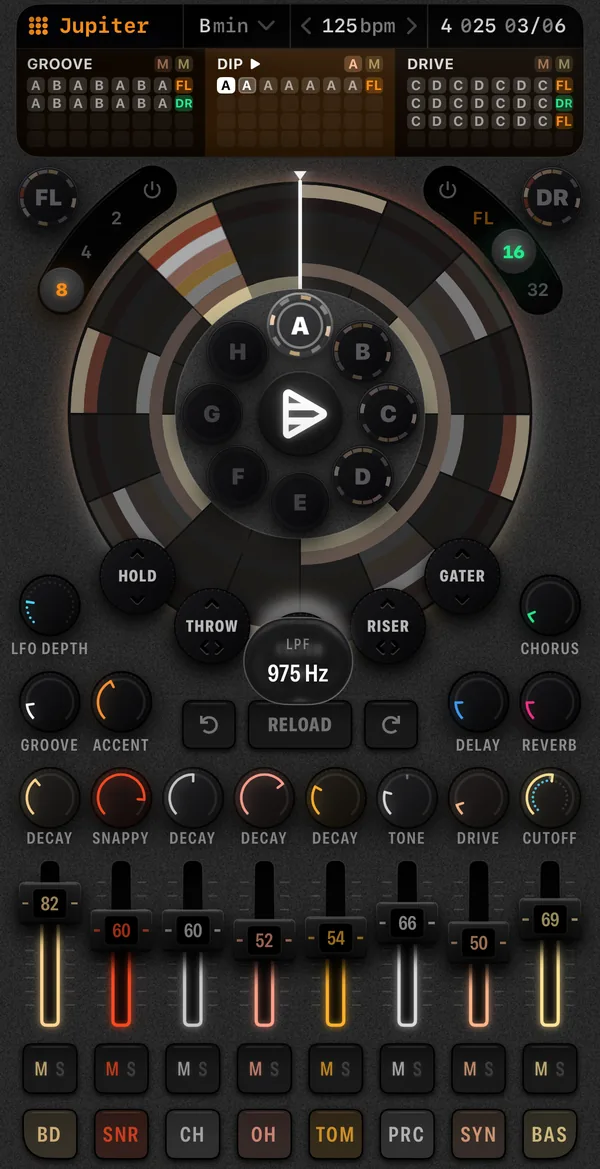
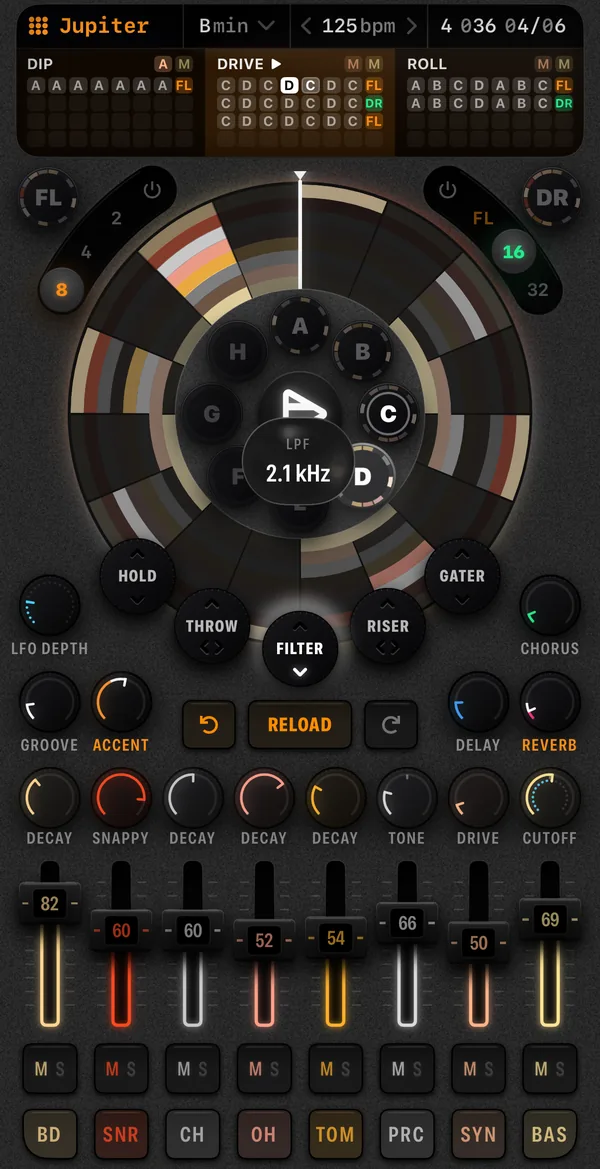
Jupiter · Tech House · 125 BPM
INTRO 8 · GROOVE 16 · DIP 8 · DRIVE 24 · ROLL 16 · OUTRO 8
A and B trade through the groove, C and D drive, and ROLL cycles all four in order.
DIP into DRIVE
Latch the filter low as DIP begins and let the groove roll muffled, bassline rolling underneath. Then open it by hand across the first bars of DRIVE. No knife, no snap: the room brightens in steps.
The channels
DIP drops the open hat entirely. It returns with TOM as the filter opens, texture and tone moving together.
Why it works. Tech house does not punch, it rolls. The filter opens the same way.
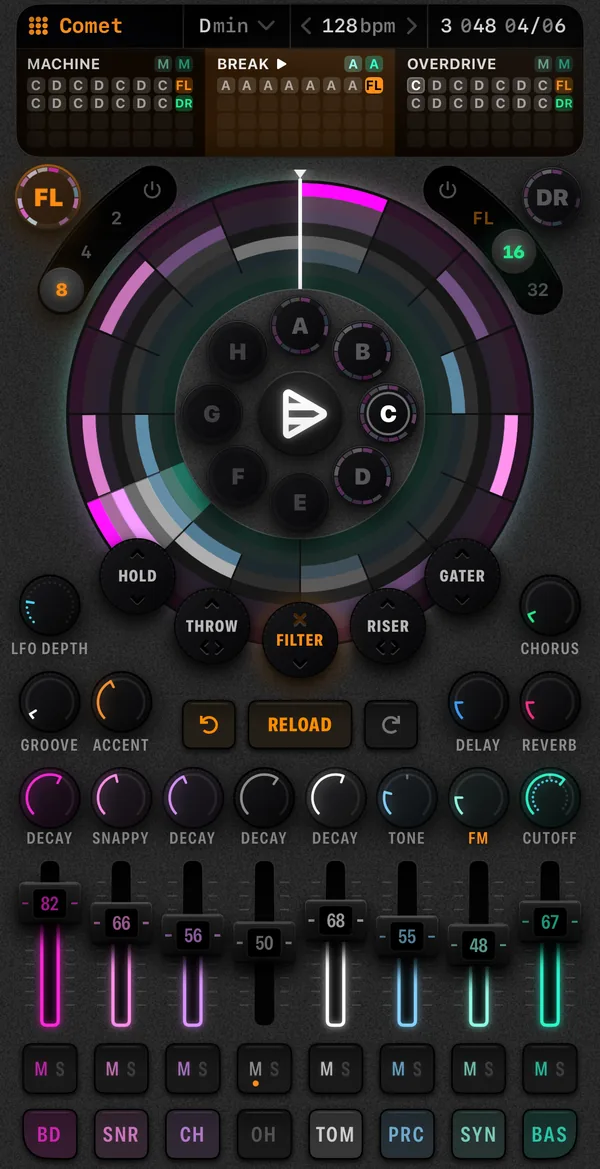
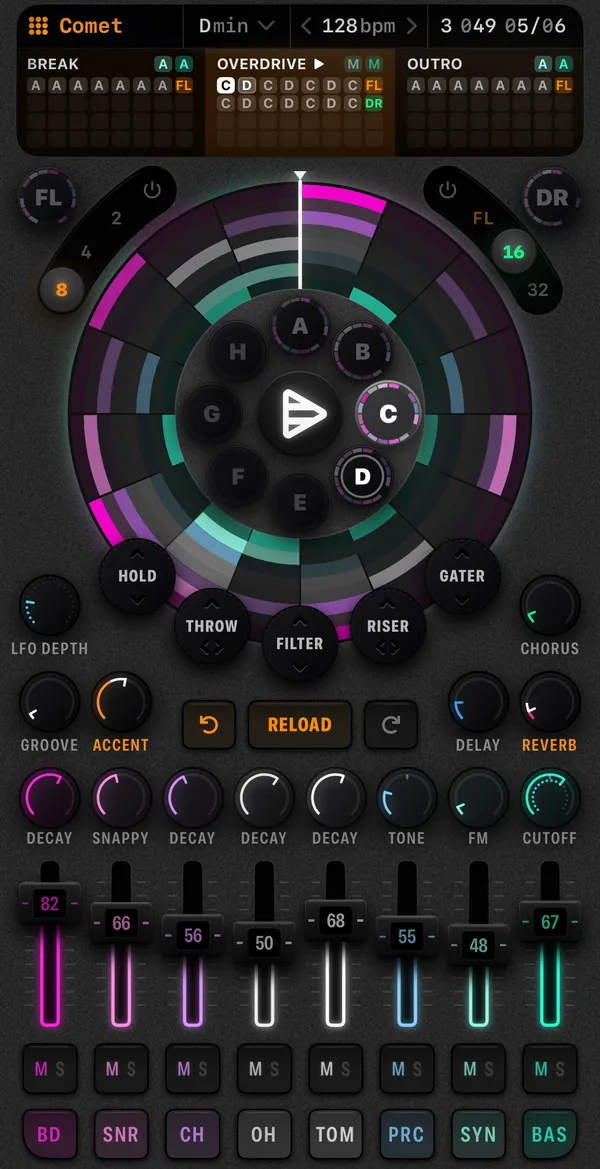
Comet · Electro · 128 BPM
INTRO 8 · CIRCUIT 16 · MACHINE 16 · BREAK 8 · OVERDRIVE 16 · OUTRO 8
A and B run the circuit; C and D power the machine and the overdrive.
BREAK into OVERDRIVE
Break the machine on camera: a bent FM macro and a muted open hat carry in from the last section, then the filter drags askew and latches. The break limps. On its last bar, press RELOAD: mutes lift, knobs come home, the filter clears, all on the downbeat.
The channels
The bass carries the FM macro on its knob, so the bending sounds circuit-bent. TOM joins as OVERDRIVE returns to full strength.
Why it works. Electro is machine music. Breaking the machine and resetting it in one press beats any drop.
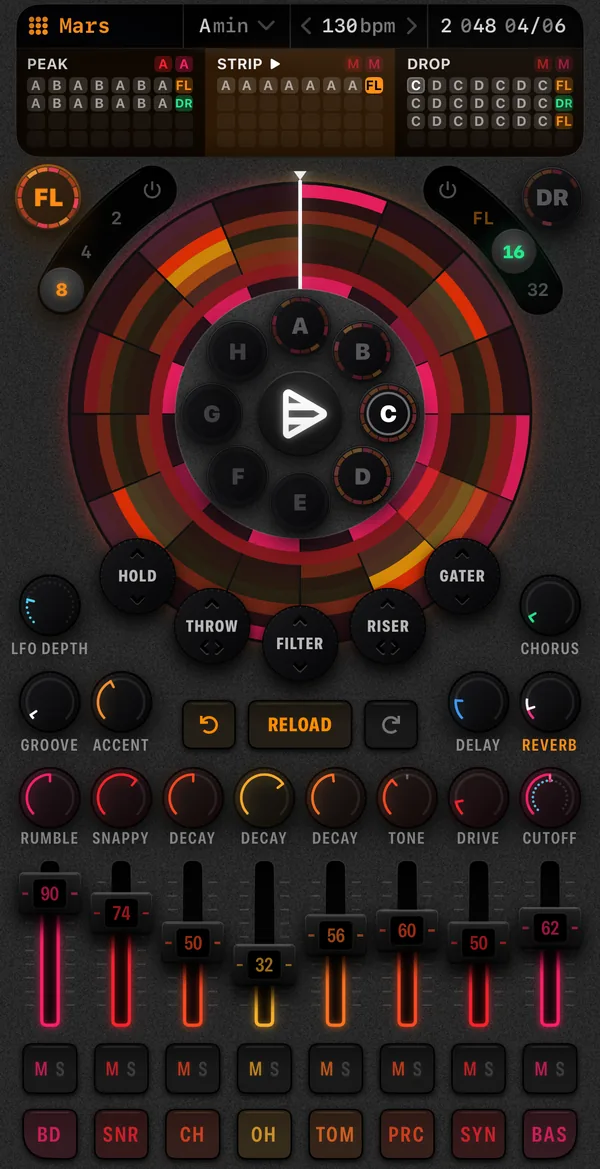
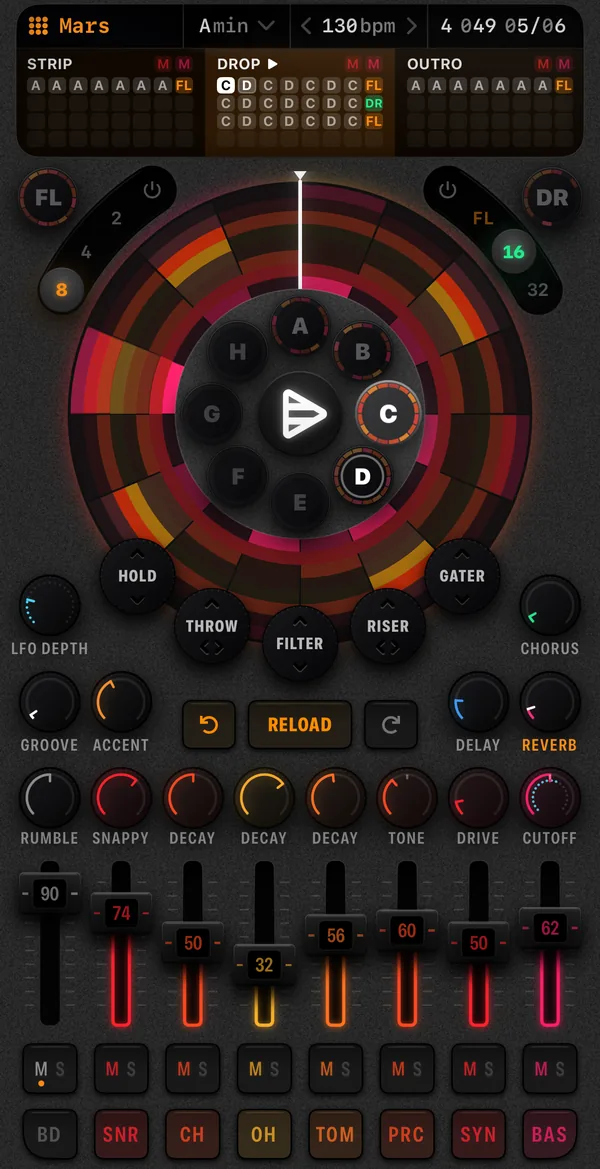
Mars · Techno · 130 BPM
INTRO 8 · DRIVE 16 · PEAK 16 · STRIP 8 · DROP 24 · OUTRO 8
A and B share the drive and peak; C and D take the drop.
STRIP into DROP
Queue the kick mute on the last bar of STRIP and let the drop hit without it: snare, a sixteenth-note hat wall, and percussion rage over no floor. Four bars later the kick returns, and its RUMBLE macro rises slowly until the ground comes back.
The channels
The hats and percussion carry the tension while BD waits. RUMBLE is the kick’s low bed, shipped on the macro knob of this template.
Why it works. A techno drop is a floor, not a firework. Withholding the kick plays it twice.
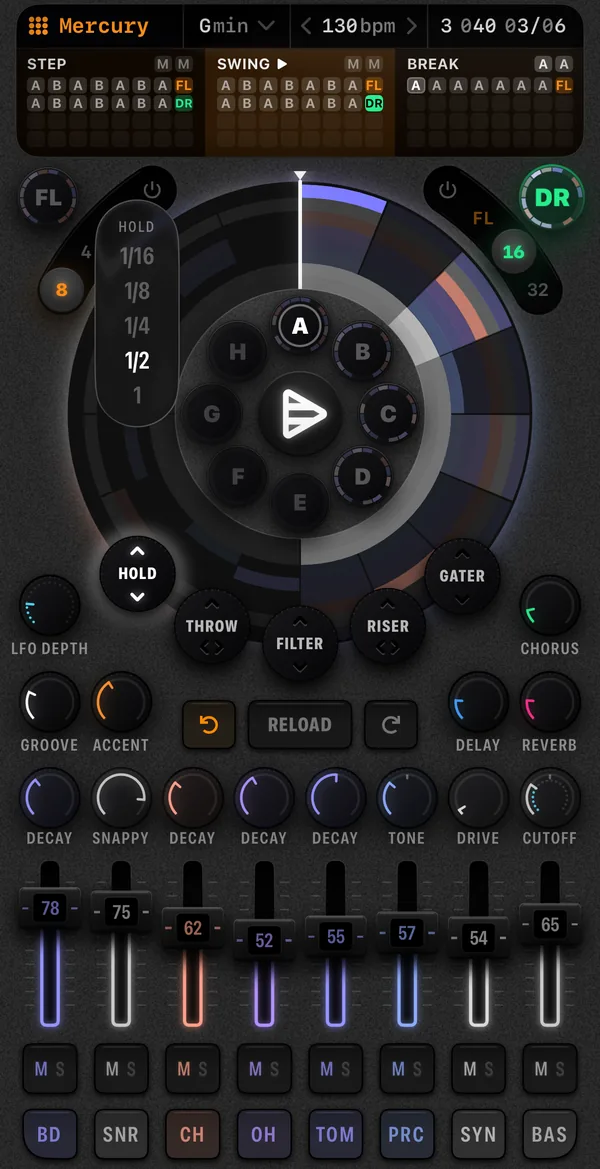
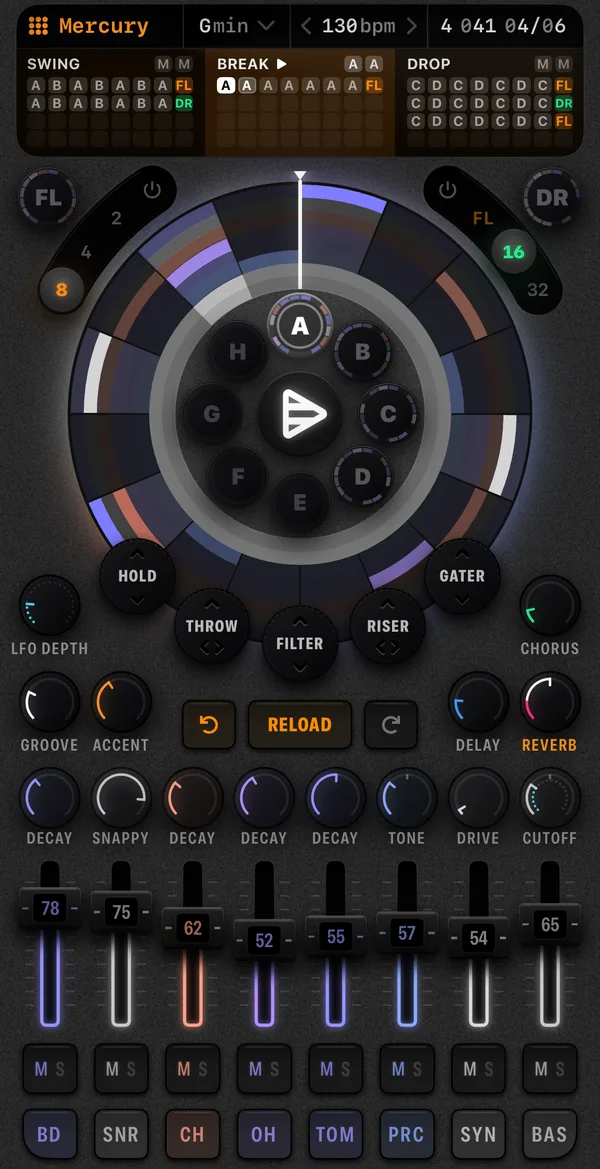
Mercury · UK Garage · 130 BPM
INTRO 8 · STEP 16 · SWING 16 · BREAK 8 · DROP 24 · OUTRO 8
A and B swing the two step; C and D take the drop.
SWING into BREAK
Hold the stutter through the last bar of SWING, chopping the two step to sixteenths, and release into the break: the drums thin out and the bassline breathes.
The channels
Mercury carries one of the busiest basslines in the collection, thirteen steps. The break exists to expose it.
Why it works. A DJ’s last bar roll: the stutter chops the two step, and the release hands the floor to the bassline.
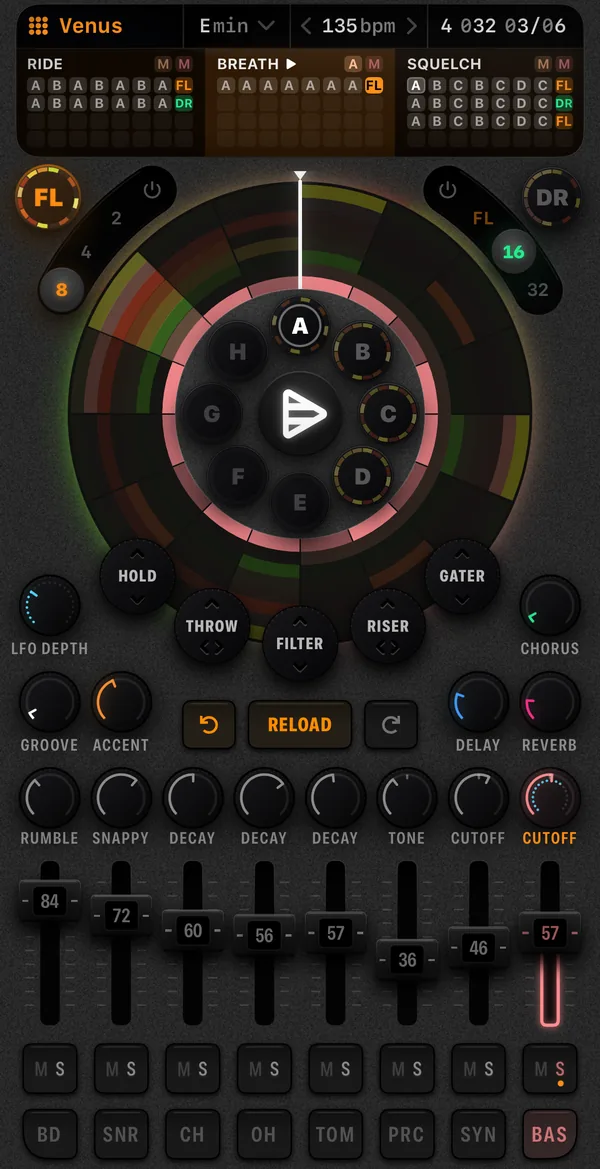
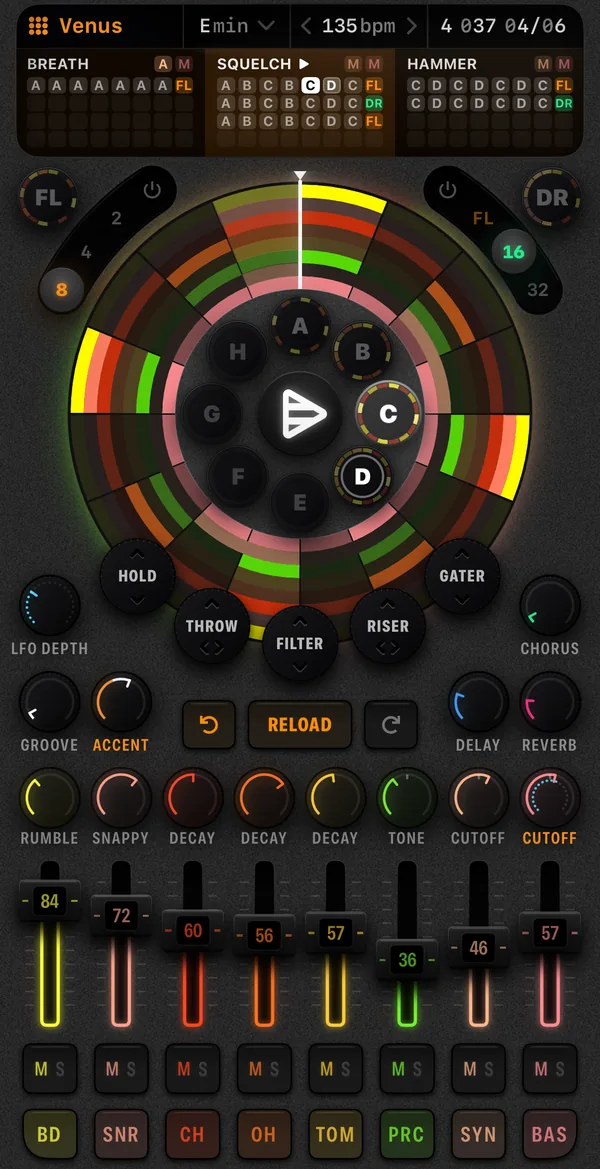
Venus · Acid · 135 BPM
INTRO 8 · RIDE 16 · BREATH 8 · SQUELCH 24 · HAMMER 16 · OUTRO 8
A and B ride; SQUELCH climbs through B, C, and D; HAMMER stays on C and D.
BREATH into SQUELCH
Solo the bass and let the 303 line stand alone through BREATH, opening the cutoff in small touches. On SQUELCH the solo lifts, the full kit slams back, and the filter keeps climbing into the acid.
The channels
The drums keep playing under the solo, which is what makes the return instant. Hats and percussion double when SQUELCH lands.
Why it works. Acid is a one line story: open the filter. The solo leaves the line alone to tell it.
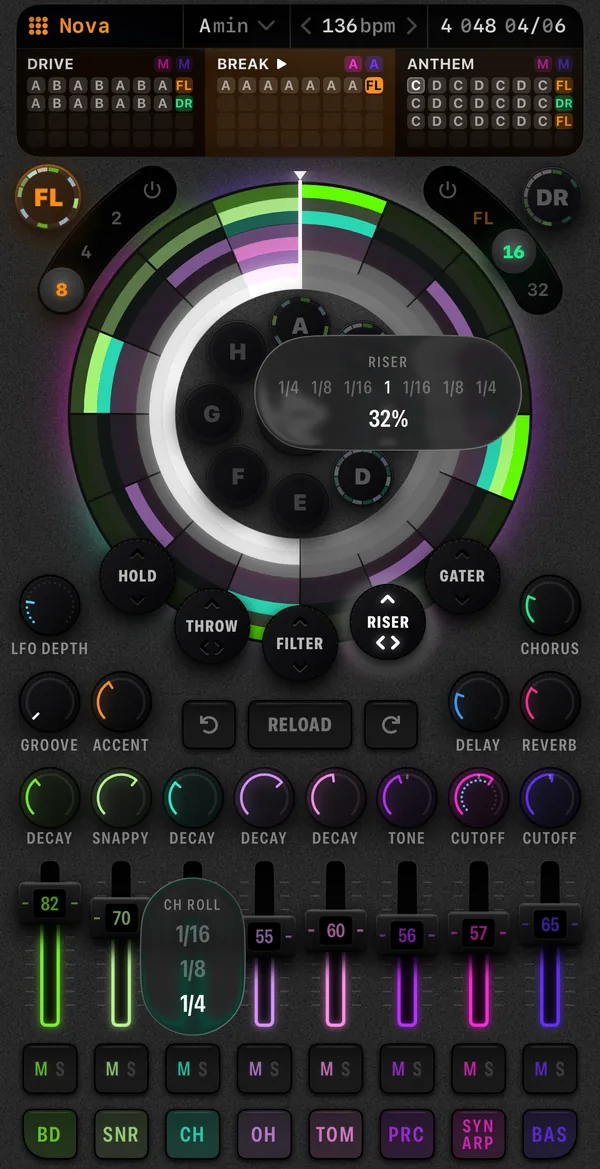
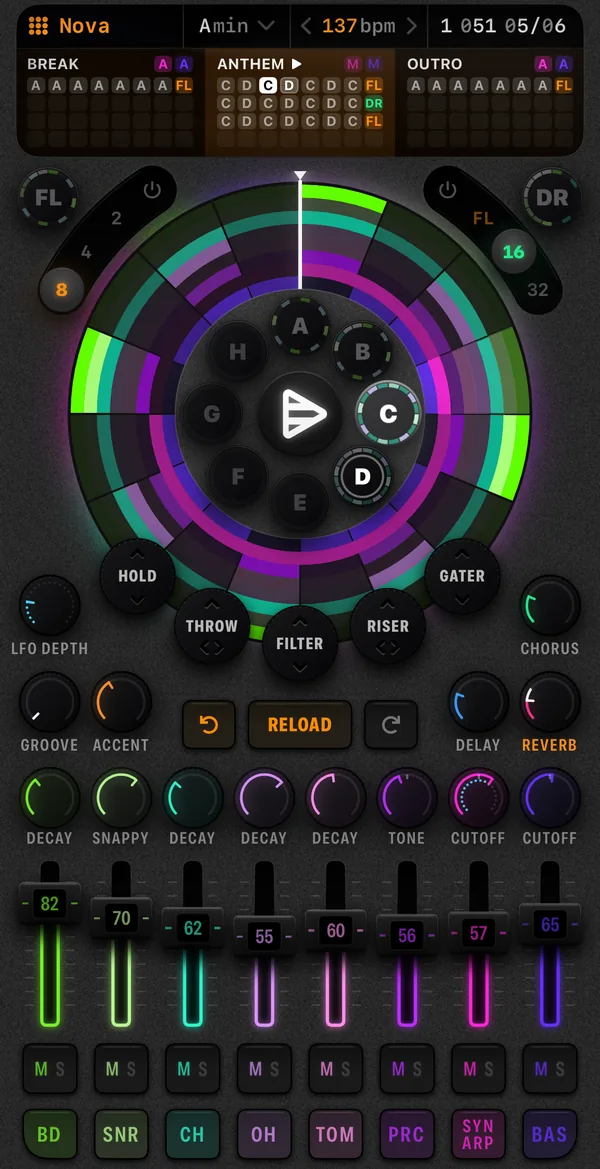
Nova · Trance · 136 BPM
INTRO 8 · LIFT 16 · DRIVE 16 · BREAK 8 · ANTHEM 24 · OUTRO 8
A and B lift and drive; C and D carry the anthem, one BPM faster by automation.
BREAK into ANTHEM
Two hands, one bar. Hold a closed-hat roll and raise the riser together through the back half of the break, then release both on the downbeat: the anthem lands whole. A plus-one BPM automation nudges it forward without anyone noticing.
The channels
CH densifies from sparse taps to sixteenths under the roll. Percussion enters with the anthem for the first time.
Why it works. Trance is the riser’s home, and this is the only template in the guide that uses one at full height. The roll builds the anthem’s hat wall before it arrives.
Uranus · Dubstep · 140 BPM
INTRO 8 · HALF 16 · WEIGHT 16 · BREAK 8 · DROP 24 · OUTRO 8
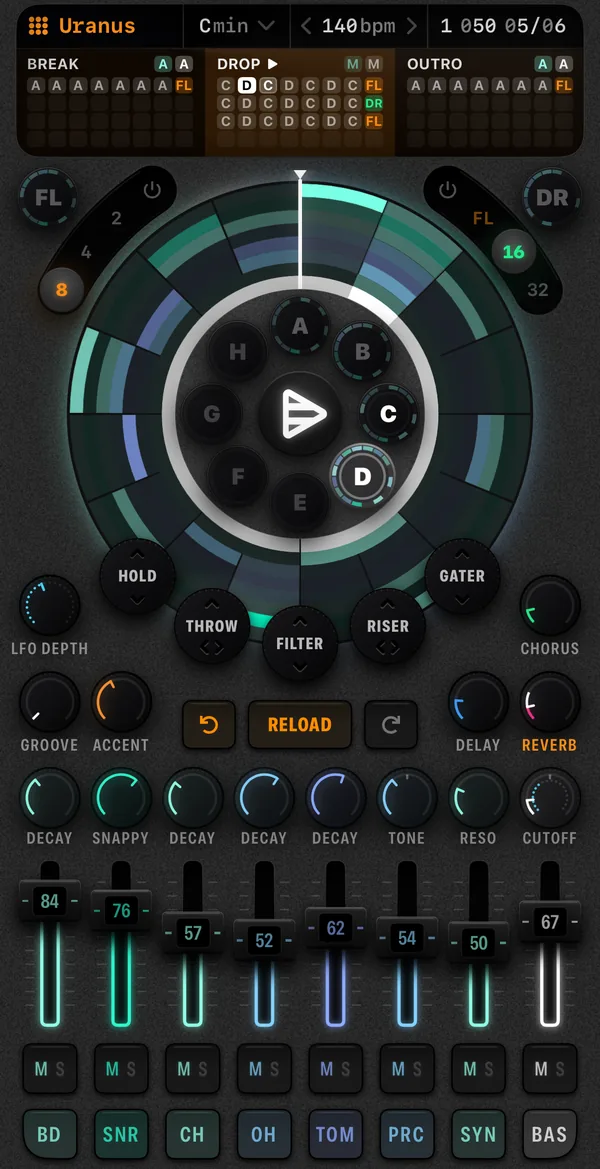
A and B carry the half time weight; C and D take the drop.
BREAK into DROP
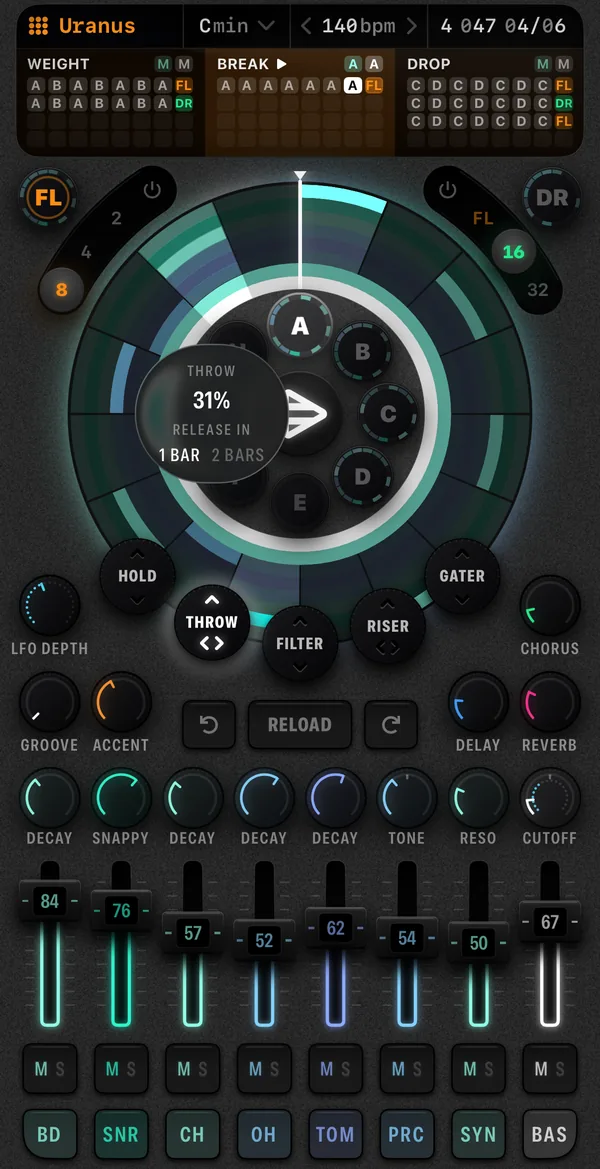
Throw the lone snare into the echo on bar 7 and release on 8: the music cuts, one bar of tail rings in the dark, and the drop knifes back on the downbeat.
The channels
BREAK runs half time and sparse, one snare hit per bar, and that single hit is what feeds the throw. TOM enters with the drop at full weight.
Why it works. That one empty bar before the drop is dubstep’s signature. The throw fills it with tail.
Black Hole · Trap · 140 BPM
INTRO 8 · VERSE 16 · HOOK 16 · SWITCH 16 · BRIDGE 8 · OUTRO 8
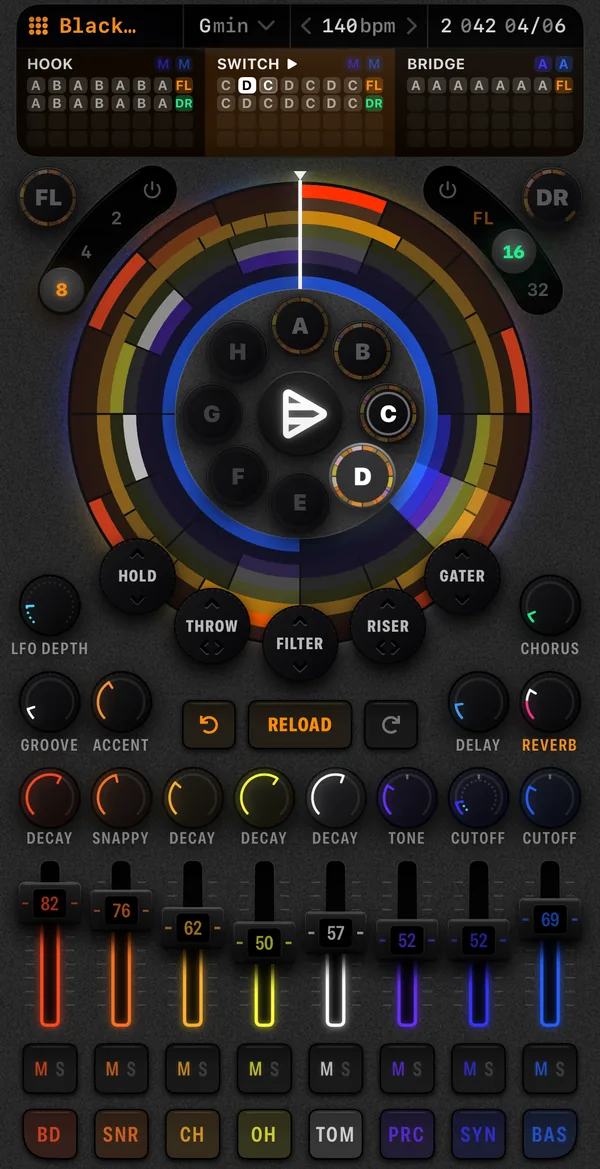
A and B run the verse and hook; C and D are the switch.
HOOK into SWITCH
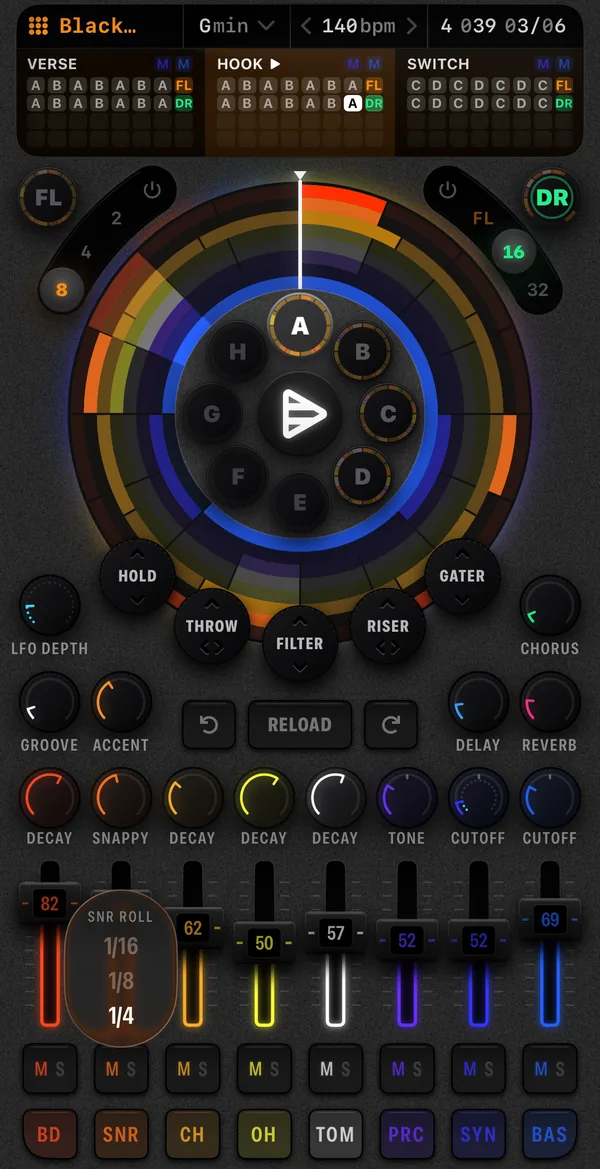
Hold the snare roll for two bars, a rising crescendo over the hook, and release exactly on the switch: the double kick pattern slams in.
The channels
The twelve step hat language stays constant across the switch, so the groove never loses its accent. BD steps up from three hits to five.
Why it works. In trap the snare roll is the announcement, and SWITCH is the genre’s own word for what happens next.
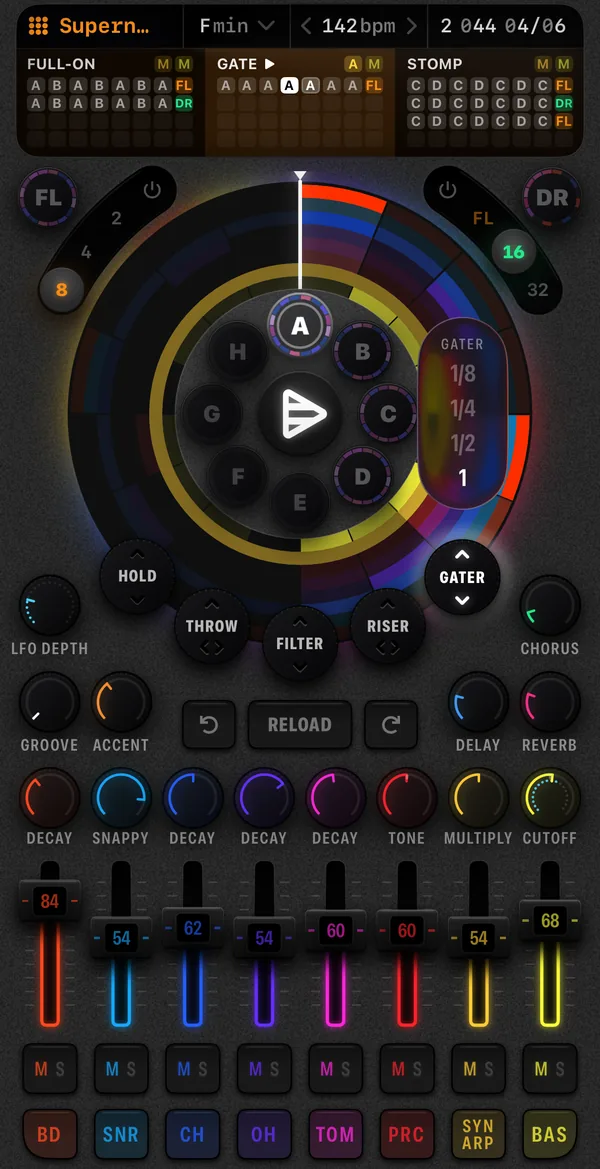
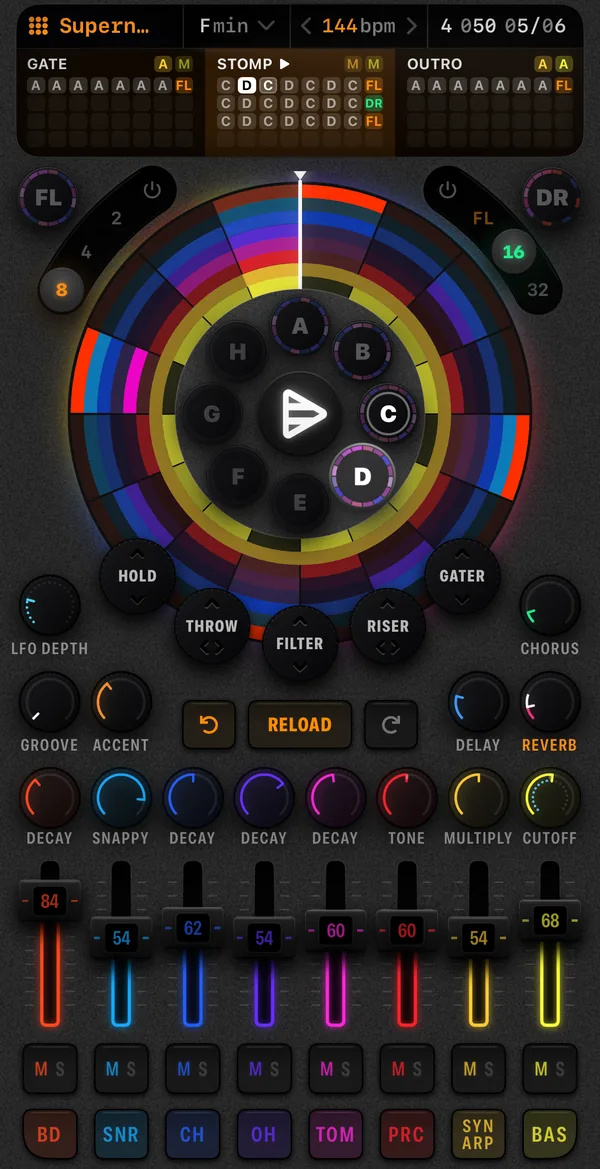
Supernova · Psy Trance · 142 BPM
INTRO 8 · RUN 16 · FULL-ON 16 · GATE 8 · STOMP 24 · OUTRO 8
A and B run full on; C and D stomp, two BPM faster by automation.
GATE into STOMP
Hold the gate through GATE and play it like an instrument, chopping density by fingertip. Release on the downbeat and the stomp runs clean, two BPM faster, hands free.
The channels
The sixteenth-note hat band takes the chop. Percussion thickens into the stomp.
Why it works. In psy trance the gate is a rhythm organ, not an effect.
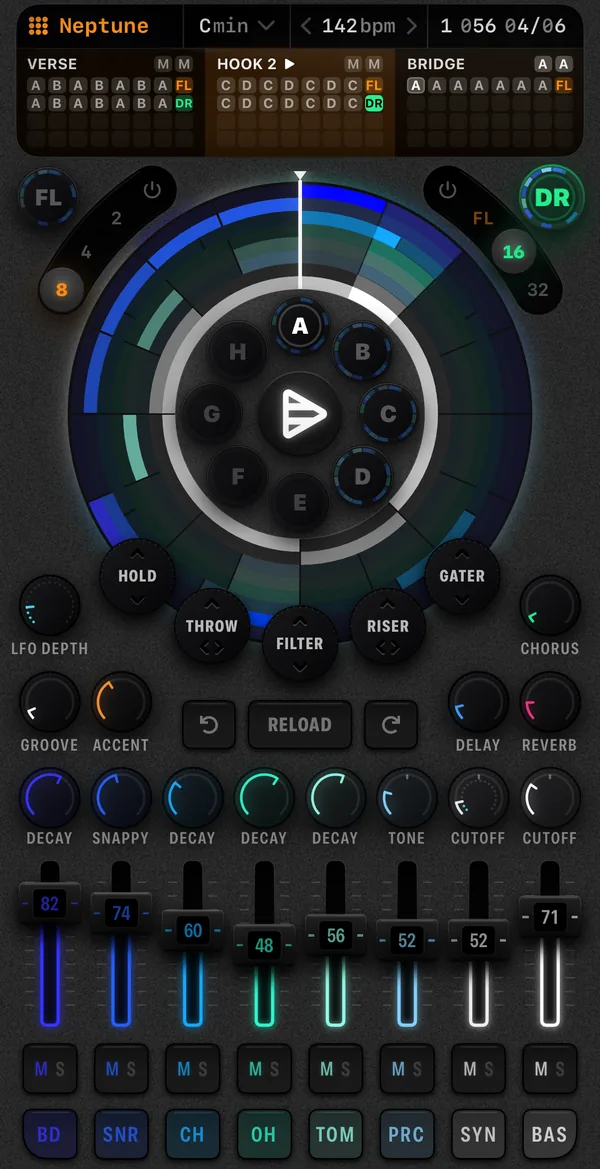
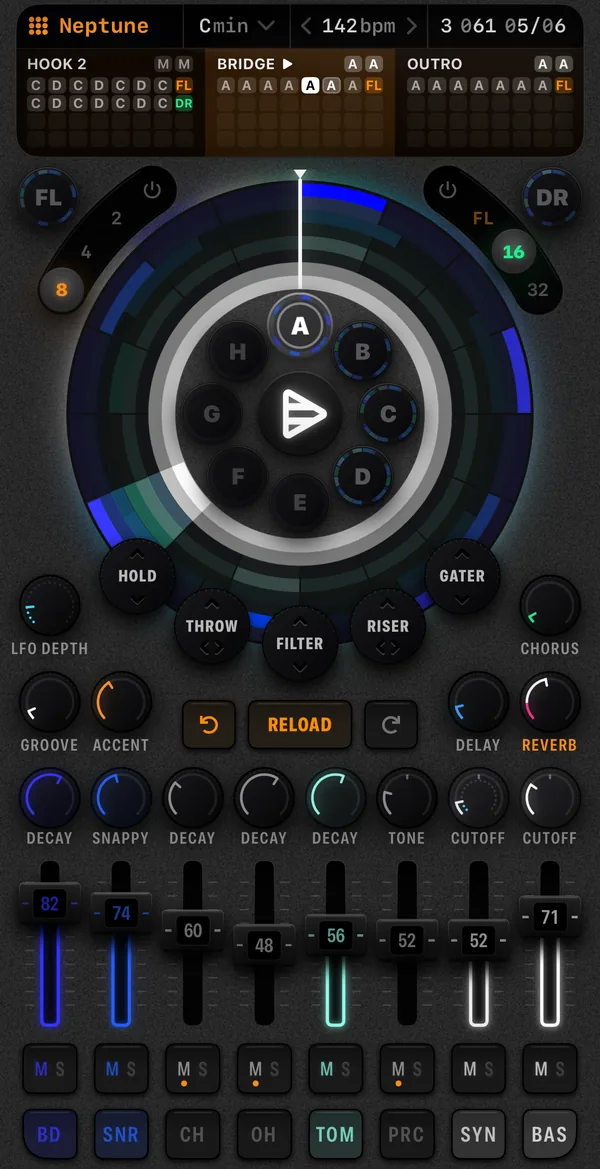
Neptune · UK Drill · 142 BPM
INTRO 8 · HOOK 16 · VERSE 16 · HOOK 2 16 · BRIDGE 8 · OUTRO 8
A and B carry the hooks and verse; C and D raise the second hook.
HOOK 2 into BRIDGE
Cut the hats, the open hat, and the percussion in one queued salvo, then let the bridge play the skeleton: kick, snare, and a sliding 808. Add nothing for eight bars.
The channels
BAS carries a seven note sliding line, and SNR keeps the drill grid alive inside the emptiness.
Why it works. The drill bridge is an undressing. Not filling the space is the move.
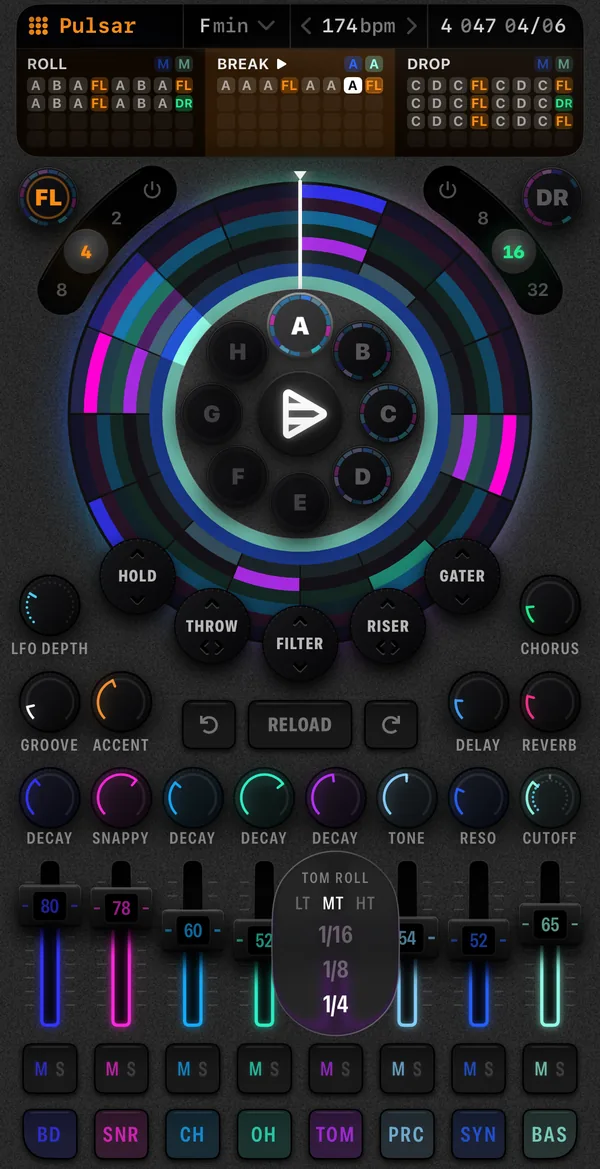
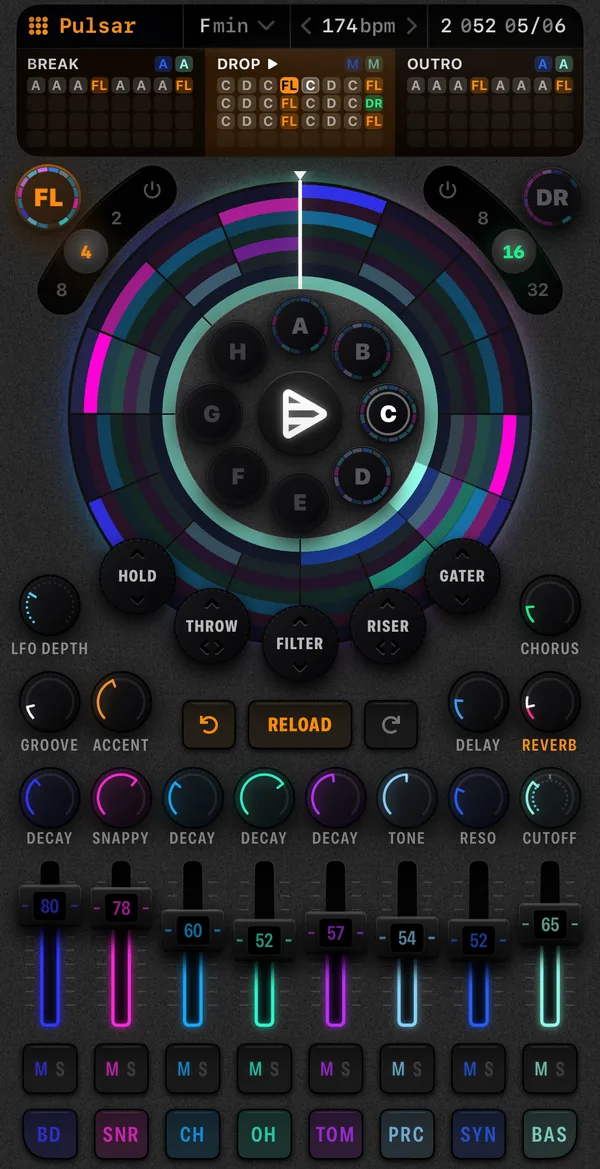
Pulsar · Drum & Bass · 174 BPM
INTRO 8 · STEP 16 · ROLL 16 · BREAK 8 · DROP 24 · OUTRO 8
A and B step and roll; C and D take the drop.
BREAK into DROP
Let the break ride the reese, then roll the toms through the last two bars, jungle style, and release into the drop at 174.
The channels
TOM lives in two steps per bar until the roll makes it the lead voice for a moment. The drop brings the full kit back at speed.
Why it works. A drum and bass drop is announced by a roll. The tom fill nods to jungle, where the percussion did the talking.